The idea of moving abroad has become increasingly attractive for retirees, remote workers, investors, entrepreneurs, and families seeking a better quality of life. Among the most popular destinations, Mexico stands out for its affordability, climate, culture, and proximity to North America. But how does the cost of living in Mexico compare with the United States and Canada?
The answer depends on where you choose to live, your lifestyle expectations, and your monthly budget. While Mexico is generally more affordable, major cities such as Mexico City can have costs that rival some mid-sized cities in North America. Understanding the real differences in housing, food, healthcare, transportation, and daily expenses is essential before making a move.
In this guide, you’ll discover what to expect in different cities, how much money you may need each month, and whether relocating to Mexico aligns with your financial goals.
The term cost of living refers to the amount of money required to maintain a specific lifestyle in a given location. It includes housing, utilities, transportation, healthcare, food, entertainment, and other recurring expenses.
When comparing Mexico with Canada and the United States, the most noticeable differences are typically found in housing, healthcare, and transportation. These categories often represent the largest portion of household expenses.
Mexico benefits from lower labor costs, different taxation structures, and regional economic factors that contribute to a more affordable lifestyle. For many foreigners, this means being able to stretch their budget further while enjoying amenities, cultural experiences, and favorable weather conditions.
One reason Mexico remains attractive is its proximity and its shared border with the U.S., making travel and relocation easier than many overseas alternatives.
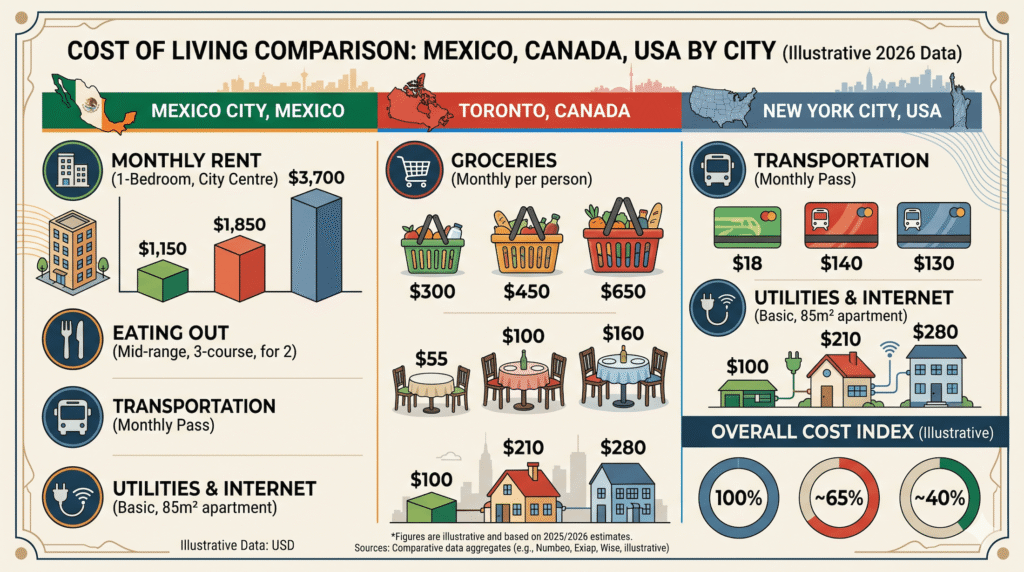
Housing is usually the largest expense regardless of where you live. Fortunately, housing in Mexico is often considerably less expensive than in comparable cities across Canada and the United States.
Mexico City is the country’s largest metropolitan area and one of the most expensive places to live in Mexico. However, many neighborhoods still offer better value than cities such as Toronto, Vancouver, Los Angeles, Seattle, or New York.
A modern one-bedroom apartment in a desirable area may range from $800 to $1,500 USD per month depending on location and amenities. Premium districts can command higher rates, but the overall cost remains competitive.
Guadalajara offers a strong balance between affordability and urban amenities. Many professionals find that living expenses remain significantly lower than in major North American cities while still providing excellent infrastructure and services.
Mérida consistently ranks among the safest cities in Mexico and has become a favorite among retirees. Housing costs are often lower than those found in Mexico City while offering a high quality of life.
Puerto Vallarta is more expensive than many inland cities because of its popularity among international buyers and tourists. Even so, housing can still be more affordable than waterfront destinations in Canada or the United States.
| City | Estimated Monthly Housing Cost |
|---|---|
| Mexico City | $800–$1,500 USD |
| Guadalajara | $600–$1,200 USD |
| Mérida | $500–$1,000 USD |
| Puerto Vallarta | $800–$1,800 USD |
| Toronto | $1,800–$3,000 USD |
| Vancouver | $2,000–$3,500 USD |
| Seattle | $1,700–$3,200 USD |
One of the biggest financial advantages of living in Mexico involves healthcare.
According to U.S. government trade resources, Mexicans receive their healthcare through a combination of public and private systems. Many expatriates prefer private healthcare due to its affordability and shorter wait times.
Private insurance premiums are often significantly lower than comparable plans in Canada and the United States. Routine doctor visits, specialist consultations, dental procedures, and diagnostic services frequently cost a fraction of what patients may pay north of the border.
For retirees and remote workers, lower healthcare costs can dramatically reduce annual living expenses.
Transportation represents another area where Mexico offers considerable savings.
Public transit systems in major cities are inexpensive and widely used. According to Numbeo, a one-way ticket on public transportation is around $0.30 USD, making commuting highly affordable.
The cost of transportation remains substantially lower than in most Canadian and American cities where residents often depend heavily on personal vehicles.
Fuel prices fluctuate, but many residents still find their overall transportation expenses lower due to reduced insurance costs, shorter travel distances, and affordable public transit networks.
For remote workers who rarely commute, transportation may represent only a small portion of their monthly budget.
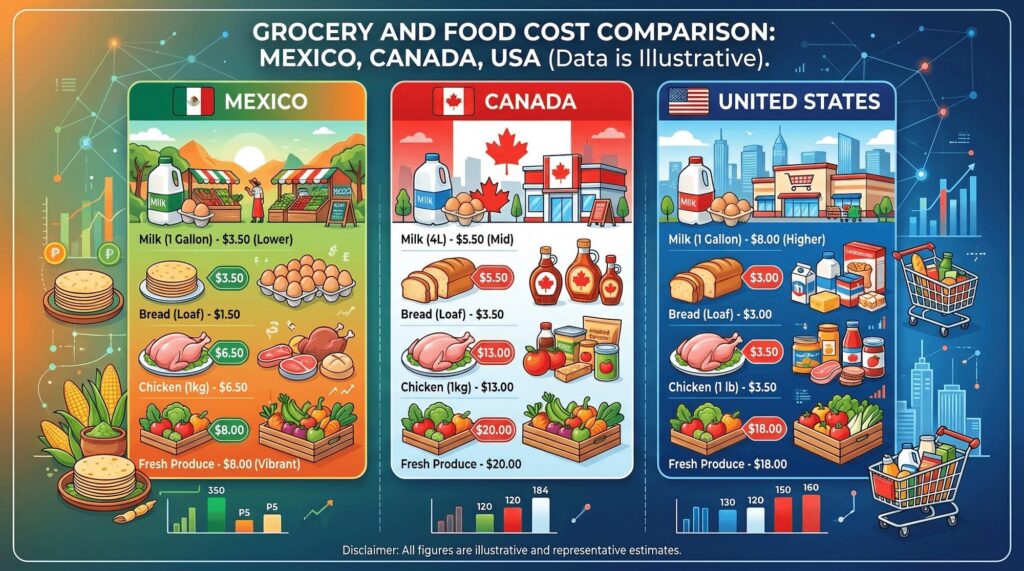
The cost of food varies by city and lifestyle. People who purchase local products and cook regularly often experience significant savings.
Fresh fruits, vegetables, local meats, and traditional foods are generally less expensive than in Canada and many regions of the United States. Imported goods, however, may carry premium pricing.
Dining out is another area where Mexico excels. Residents can enjoy affordable local restaurants, street food, cafés, and family-owned establishments that provide excellent value.
A single person may spend between $150 and $350 USD per month on groceries depending on dietary preferences and purchasing habits.
Families often benefit from local markets that offer competitive prices and fresh products throughout the year.
Different lifestyles require different levels of spending. The following examples illustrate realistic monthly budgets for various residents.
Ideal for retirees, digital nomads, and individuals who prioritize affordability.
Estimated monthly cost:
Total monthly cost: $900–$1,500 USD
A balance between comfort, convenience, and quality amenities.
Estimated monthly cost:
Total monthly cost: $1,500–$2,700 USD
Suitable for luxury properties, premium healthcare, private transportation, and upscale entertainment.
Estimated monthly cost:
Total monthly cost: $3,500+ USD
Many prospective movers specifically compare Mexico and Canada.
Research from LivingCost.org consistently shows that Mexico offers a significantly lower overall cost profile than Canada across most categories.
Housing, dining, transportation, and services frequently cost less in Mexico. However, Canada may provide advantages in employment opportunities, social services, and public infrastructure depending on personal priorities.
The decision often comes down to lifestyle preferences rather than purely financial considerations.
Taxes can affect the true cost of living more than many people realize.
Individuals considering long-term relocation should understand local tax obligations and residency requirements. Resources such as Tax Rates ↗ Mexico → can help provide general guidance when evaluating financial planning options.
Consulting a qualified tax professional remains essential before making any international move.
Several variables determine the actual cost you will experience:
Living in expat-heavy or tourist-focused districts often increases expenses.
Frequent dining out, imported products, luxury housing, and private services can raise costs substantially.
Exchange rate fluctuations can impact purchasing power for Americans and Canadians receiving income in foreign currencies.
Public versus private healthcare choices significantly affect annual spending.
Larger households naturally face higher housing, food, education, and transportation expenses.

Before moving, create a relocation checklist that includes:
Having a structured plan helps avoid unexpected expenses and improves long-term financial stability.
For many individuals and families, the cost of living in Mexico presents an attractive opportunity to improve quality of life while reducing monthly expenses. Housing, transportation, food, and healthcare costs are often substantially lower than those found in Canada and the United States.
That said, the ideal city depends on your priorities. Mexico City offers world-class amenities, Mérida provides safety and affordability, Guadalajara balances culture and value, and Puerto Vallarta delivers a desirable coastal lifestyle.
The best approach is to evaluate your expected expenses, compare cities carefully, and build a realistic budget before relocating.
If you’re exploring property opportunities, relocation options, or investment strategies in Mexico, visit Coldwell Banker México to learn more about available resources and local market insights.
Yes, many people can live comfortably in Mexico on $1,000 per month, particularly in smaller cities and non-tourist destinations. Housing, transportation, food, and utilities are often affordable enough to support a modest lifestyle. However, comfort levels depend on location, personal preferences, healthcare needs, and whether you choose local or imported products. Major urban centers typically require a higher monthly budget.
In most cases, yes. Mexico is generally less expensive than Canada across key categories such as housing, dining, transportation, and healthcare. While costs vary by city, many retirees, remote workers, and expats discover that their income stretches significantly further in Mexico. The savings can be especially noticeable for renters and individuals seeking lower day-to-day living expenses.
The duration depends on your lifestyle and spending habits. If your average monthly expenses total $1,500, $100,000 could potentially last more than five years. Individuals living more modestly may stretch those funds even further, while luxury lifestyles in high-demand destinations could shorten that timeline considerably. Careful budgeting and city selection play major roles in determining longevity.
Grocery costs in Mexico are generally lower than in Canada, particularly when purchasing local products. Fresh produce, meats, and staple foods often cost less, helping households reduce overall food expenses. Imported products can narrow the price gap, but many residents report noticeable savings compared with Canadian supermarkets. Actual spending depends on dietary preferences and shopping habits.
A comfortable lifestyle in Mexico often ranges between $1,500 and $2,700 USD per month for a single person, depending on city and lifestyle expectations. This budget typically covers quality housing, utilities, healthcare, dining, transportation, and entertainment. Costs may be lower in smaller cities and higher in premium neighborhoods or coastal destinations popular with international residents.
Yes. A monthly budget of $2,000 allows many individuals to enjoy a comfortable lifestyle in numerous Mexican cities. This amount can often cover rent in a desirable area, groceries, transportation, private healthcare, entertainment, and occasional travel. In many regions, $2,000 provides a standard of living that may be difficult to achieve with the same budget in Canada or the United States.